The Finest Hour: Why Midlife Is the Most Compelling Moment to Acquire the Luxury Handbag You've Always Deserved
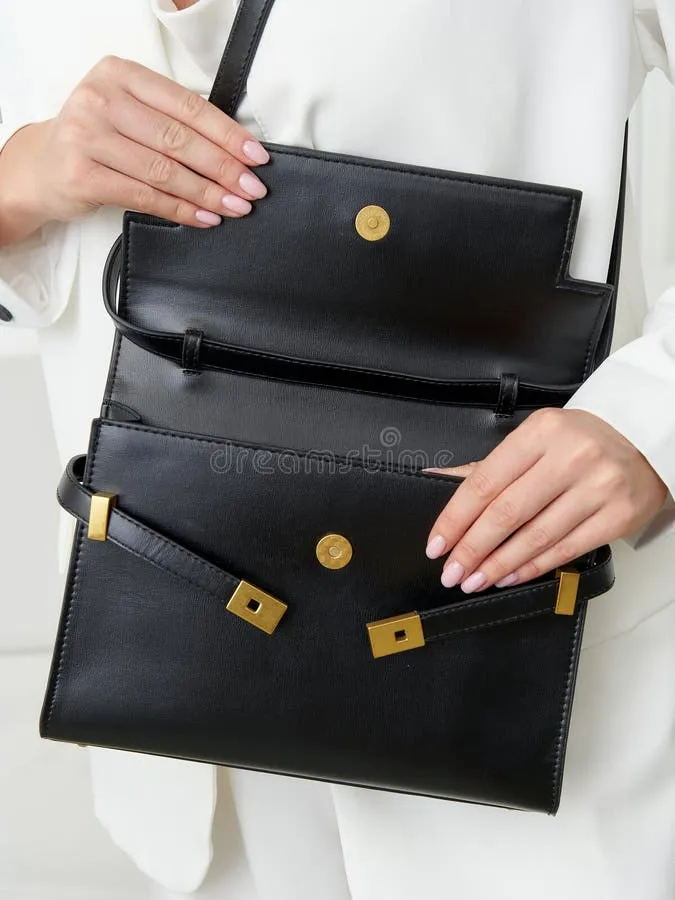
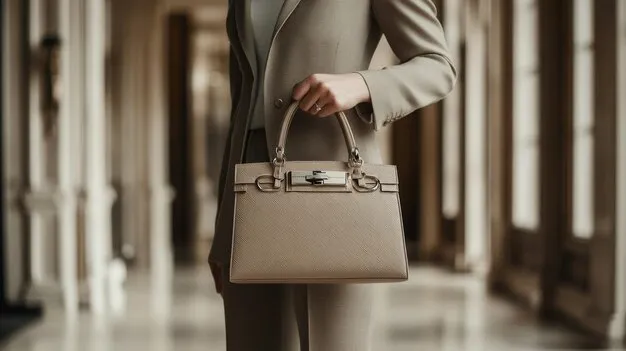
Photo: elegant mature woman luxury handbag confident midlife style, via thumbs.dreamstime.com
There is a particular category of purchase that women in their 40s and 50s describe in almost identical terms, regardless of geography, profession, or income bracket. It is the bag they have admired for years — perhaps decades — and consistently deferred. The reasons for the deferral are familiar: children, mortgages, the quiet internalized logic that the timing was never quite right, or that the purchase required a justification that remained just out of reach.
What is changing, with notable momentum across the American luxury market, is the recognition that midlife is not the wrong time for this acquisition. It may, in fact, be precisely the right one.
The Financial Architecture of a Well-Timed Purchase
Luxury handbags have, over the past two decades, demonstrated a capacity for value retention — and in many cases, appreciation — that few consumer goods can match. The Hermès Birkin, the Chanel Classic Flap, and the Louis Vuitton Neverfull have all posted resale premiums that would not embarrass a modest investment portfolio. According to data tracked by the resale platform Rebag, certain Chanel styles have appreciated at rates exceeding traditional equity markets over comparable periods.
For a woman in her mid-40s or early 50s who has spent years building financial stability, this context matters. A luxury handbag acquired at this life stage is rarely purchased on credit or at the expense of foundational financial priorities. It is, instead, a considered allocation — one made from a position of security rather than aspiration alone.
This distinction is not trivial. It transforms the nature of the purchase entirely. The bag is no longer a stretch; it is a choice. And choices made from a position of strength carry a different emotional weight than those made from longing.
What the Market Understands About This Consumer
The American luxury market has been slow to fully acknowledge what its own sales data has long suggested: women over 40 represent one of the most economically powerful and brand-loyal consumer segments in the country. According to research from the AARP and corroborated by luxury retail analysts, women in the 45-to-64 age bracket control a disproportionate share of discretionary consumer spending relative to their representation in mainstream marketing.
This is beginning to change. Brands including Bottega Veneta, The Row, and Loro Piana have built their most recent campaigns around an aesthetic that speaks directly to earned sophistication rather than aspirational youth. The visual language has shifted: quieter logos, richer materials, silhouettes that reward familiarity rather than novelty. This is not accidental. These houses are responding to a consumer who knows what she wants and has the means to acquire it on her own terms.
For the style-conscious woman navigating this landscape, the implication is clear: the market is finally catching up to her.
The Emotional Economics of Deferred Desire
Beyond the financial calculus, there is a more personal mathematics at work — one that is harder to quantify but no less real. Women who have spent their 30s and early 40s in the intensive years of career-building, family-raising, or both, often arrive at midlife with a recalibrated sense of what matters and what they have earned.
This recalibration is not vanity. It is clarity. The psychologist's term for this phenomenon is "earned self-regard" — a sense of self-worth that is grounded not in external validation but in an honest accounting of one's own history. For many women, a significant luxury purchase at this stage is less about display and more about acknowledgment: a private recognition of a journey that has been, by any measure, considerable.
The handbag, in this context, is not a trophy. It is a marker — of time, of effort, of the particular kind of confidence that cannot be purchased in one's 20s because it has not yet been built.
Milestone Moments as Natural Entry Points
Midlife is rarely a single event. It is a sequence of transitions, many of which create natural inflection points for a meaningful acquisition. An empty nest. A promotion that has been years in the making. A divorce navigated with grace. A business launched, a degree completed, a decade of sobriety celebrated. These moments carry weight, and the objects we choose to mark them with carry that weight forward.
A luxury handbag acquired at such a juncture becomes something more than an accessory. It becomes a reference point — a physical artifact of a chapter that mattered. Women who have made such purchases frequently describe carrying the bag not merely as a stylistic choice but as a daily reminder of their own resilience and intentionality.
This is the philosophy that animates Werf Bag's curatorial approach: that the finest pieces are not merely beautiful objects but vessels of meaning, chosen with care and carried with purpose.
Choosing the Piece That Reflects Who You Are Now
For the woman approaching this purchase for the first time, or returning to it after years of deferral, the most important question is not which bag is currently trending. It is which bag reflects the woman she has become.
This is a subtly different inquiry, and it produces different answers. The structured Celine Box bag, with its architectural restraint, speaks to a different sensibility than the fluid generosity of a Loewe Puzzle. The quiet authority of a Mansur Gavriel bucket bag differs from the deliberate iconography of a Gucci Diana. None of these choices is wrong; each is a statement, and the statement is most powerful when it is genuinely one's own.
A useful exercise: consider not which bag would have been coveted at 28, but which bag, carried into a room today, would feel most completely like an extension of the person who has arrived. That alignment — between the object and the self — is the hallmark of a purchase made not from trend-following but from genuine self-knowledge.
The Permission That Was Never Required
Perhaps the most significant shift occurring in the American luxury market right now is cultural rather than commercial. The long-standing and largely unexamined assumption that lavish personal investment is the province of youth — that a woman in her 50s acquiring a four-figure handbag requires more justification than a woman in her 30s doing the same — is losing its hold.
The women driving this shift are not making a statement about age. They are making a statement about value: their own, and that of the objects they choose to carry. In doing so, they are redefining what it means to invest in oneself at every stage of a life well-lived.
The bag has always been there, waiting. The finest hour to carry it may be now.