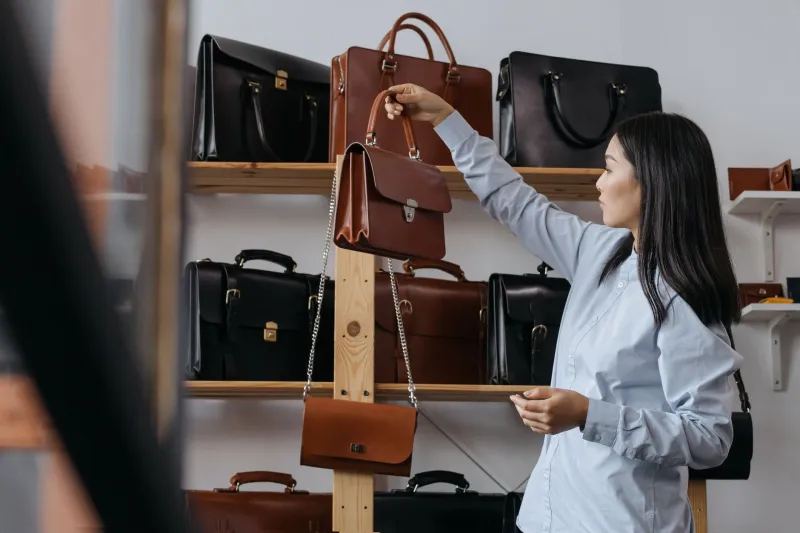
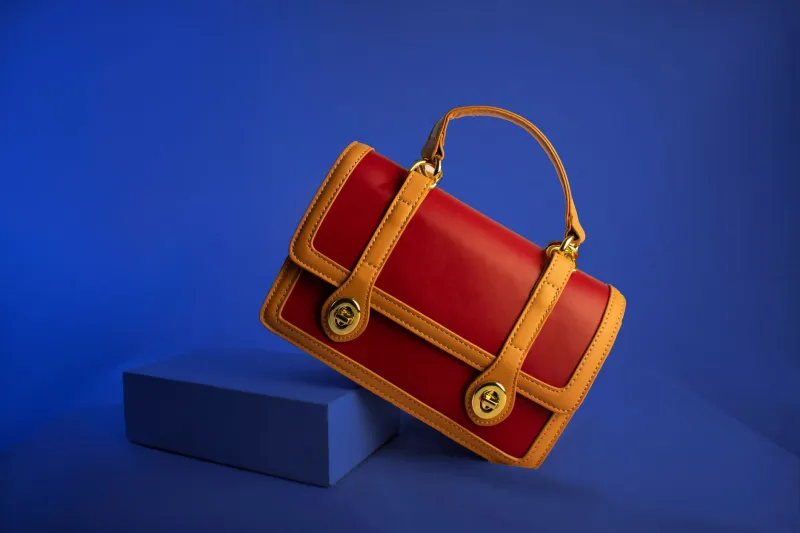
Access, Not Ownership: The Quiet Revolution Reshaping How American Women Carry Luxury
There was a time when acquiring a luxury handbag was a singular event — a pilgrimage to a boutique, a waitlist, a white box carried home like a trophy. That ritual has not disappeared, but it now shares the stage with something far more fluid. In cities from Chicago to Atlanta, American women are increasingly treating the luxury handbag not as a possession to be accumulated, but as a resource to be accessed — rented for a wedding weekend, swapped for a season, borrowed through a community of like-minded collectors.
The numbers tell part of the story. The luxury rental market in the United States has grown steadily over the past decade, with handbags among its most requested categories. Peer-to-peer platforms and membership-based services have multiplied, while informal swapping networks — organized through group chats, neighborhood apps, and collectors' clubs — operate largely beneath the radar of traditional retail. What emerges is a parallel economy, one where the same Hermès Birkin might spend its year in four different closets across four different states.
The Pragmatists of the Rotating Closet
The women driving this shift defy the stereotype of the cash-strapped shopper. Many are established professionals with the means to purchase outright. What they lack, increasingly, is the desire to be anchored to a single bag. A New York attorney might carry a structured tote from September through trial season, then rent a slouchy shoulder bag for a friend's Napa birthday. A Dallas mother of three might rotate through a borrowing circle rather than commit to a closet of barely used leather.
Their reasoning tends to be unsentimental and refreshingly practical. Tastes change. Lifestyles shift. A bag that felt essential at thirty-five can feel like a stranger at fifty. Renting and swapping allows for experimentation without consequence — the chance to live with a style for a month before deciding whether it deserves a permanent place.
There is also the arithmetic. A five-figure handbag worn twice a year is, functionally, an extraordinarily expensive storage item. Renting the same piece for a fraction of its retail price, or trading a season of access for a season of someone else's, converts a dormant asset into an active wardrobe.
The Platforms Behind the Shift
The infrastructure supporting this behavior has matured considerably. Subscription services offer members rotating access to designer bags for a monthly fee, handling insurance, authentication, and cleaning. Peer-to-peer marketplaces connect individual owners with renters, often with authentication and damage protection built in. And a quieter layer — the swap meet, the collectors' circle, the trusted friend network — runs on reputation rather than contracts.
For the owners who lend their bags out, the logic is equally compelling. A well-maintained handbag is a depreciating asset sitting idle; renting it out offsets the cost of ownership and, in some cases, turns a profit. Others describe the arrangement in softer terms: the pleasure of seeing a beloved piece get used, of introducing someone else to a house or a silhouette they might never have tried.
What This Means for the Idea of Luxury
The traditional luxury model rests on scarcity and permanence — the bag as an object you own for life, perhaps pass down. The access economy proposes something different: luxury as an experience, consumed in seasons rather than decades. It is, in some sense, a return to an older logic. Before the era of the investment handbag, women borrowed from friends, rented formal accessories, and treated fine things as part of a shared social fabric rather than a private vault.
The implications for collectors are worth sitting with. If a bag can be borrowed for the occasion that justifies it, does the case for owning it weaken? Or does access, paradoxically, sharpen the desire to own — the rental period serving as an extended, low-stakes audition for a purchase that feels more certain precisely because it was tested?
Early evidence suggests the relationship is symbiotic rather than adversarial. Renters frequently become buyers once they have confirmed that a style suits their life. Owners, having seen what the rental market will bear, often buy with more intention, favoring pieces with broad appeal and durable construction — the very qualities that make a bag worth carrying, whether by one woman or four.
A Smarter Wardrobe, Carried With Intention
None of this diminishes the case for ownership. A handbag chosen carefully, carried for years, and eventually passed on remains one of fashion's most durable pleasures. But the second bag economy introduces a welcome discipline into a category long prone to accumulation for its own sake. It asks a clarifying question: do you want this bag, or do you want to carry it once?
For American women navigating full lives and finite closets, that question is proving unusually productive. The result is not a wardrobe without luxury, but a wardrobe without waste — fewer bags bought on impulse, more carried with certainty, and a growing recognition that the truest measure of a handbag is not what it cost, but how often it leaves the house.