From Boardroom Armor to Soft Power: The Quiet Reinvention of the American Work Bag

Photo by Photo by Zulfugar Karimov on Unsplash on Unsplash
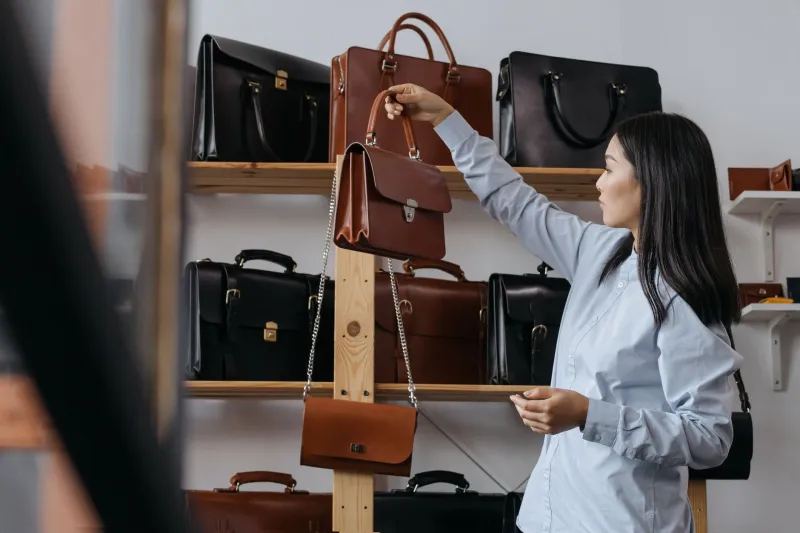
Five years ago, the American professional's handbag followed a fairly rigid script. Structured top-handle bags in polished calfskin sat on conference tables like corporate credentialeds — beautiful, intimidating, and largely impractical. Then the office emptied out, and when it refilled, something had shifted. The bag that returned was not the bag that left.
The Data Behind the Softening
Resale platforms tell a consistent story. Since 2020, search and resale demand for rigid, logo-forward work totes has cooled noticeably, while soft leather shoulder bags and unstructured laptop totes have climbed steadily in both price retention and turnover speed. Styles that once commanded a premium for their architectural stiffness — the kind of bag that stood at attention beside a boardroom chair — now trade at wider discounts than their slouchier cousins.
The logic is not mysterious. A bag carried three days a week, often wedged under a cafe table between meetings or slung from a shoulder during a commute that now might involve a workout, needs to flex. Literally. American women are no longer dressing for the office; they are dressing for the day, and the office is merely one stop on it.
Stylists Weigh In on the New Uniform
New York-based stylists describe the shift as a move from "armor to ease." The structured bag, one noted, signaled arrival; the soft bag signals adaptability. Clients now ask for something that reads polished on a video call, survives a subway ride, and doesn't announce itself across a restaurant.
This has elevated what industry watchers call the soft laptop tote — generous interior, supple leather, minimal hardware, and just enough shape to look intentional. Think of it as the sartorial equivalent of the blazer-over-knits formula: professional without being ceremonial.
What the Hybrid Era Values
The bags gaining ground share a handful of traits:
- Weight discipline. Commuting two or three days a week means the bag itself cannot add a pound of vanity before the laptop goes in.
- Discreet capacity. A gym change of clothes, a tablet, a water bottle — the hybrid bag swallows the day without looking like luggage.
- Understated exteriors. Small logos and tonal hardware dominate. Loudness, resale data suggests, ages faster than leather does.
- Convertibility. Shoulder strap, top handle, crossbody option — versatility has become a value metric, not a compromise.
The New Power Bags
For those rebuilding a work rotation around hybrid life, the brief is clear. Consider these archetypes:
- The Soft Structured Tote — supple grained leather, a laptop sleeve, and a silhouette that holds its dignity even when it slumps.
- The Refined Shoulder Bag — mid-sized, top-zip, quietly branded; it moves from desk to dinner without a costume change.
- The Elevated Weekender-Adjacent Tote — for the day that starts with a flight and ends with a client dinner.
- The Compact Crossbody-Work Hybrid — for offices that have traded cubicles for hot desks and coffee shops.
Carried With Intention
The rigid status bag has not vanished; it has simply been repositioned. It now lives at dinners, at openings, at the occasions when a bag's job is to be seen rather than to serve. Meanwhile, the everyday work bag has become something more interesting: a piece chosen not for what it proves, but for what it permits.
In that sense, the hybrid era has been good for the American handbag. It asked the question every curated collection should ask — does this earn its place? — and the bags that survived the answer are, by and large, the better ones.