The Subscription Satchel: What Borrowing Luxury Actually Costs You

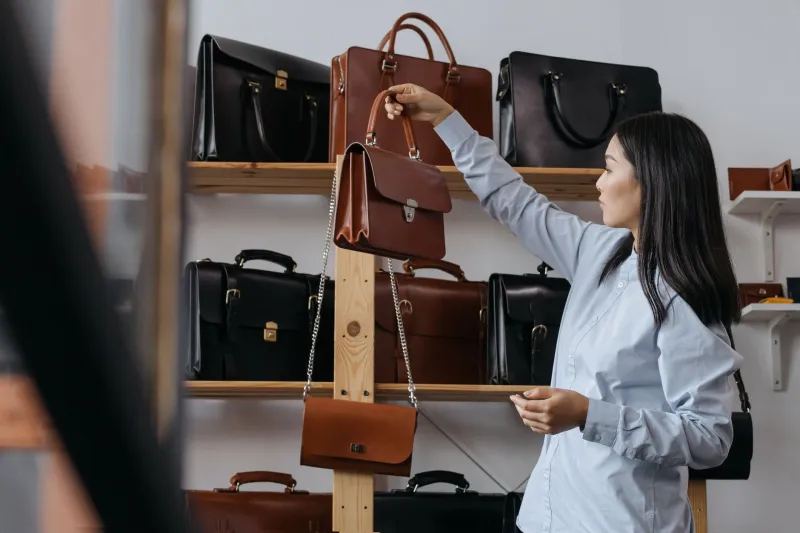
Photo: Patricia Arévalo, CC BY-SA 4.0, via Wikimedia Commons
The pitch is seductive, and it is everywhere. For a few hundred dollars a month — less than one payment on the bag itself — you can carry a different designer handbag to every wedding, board meeting, and brunch. No savings plan. No resale anxiety. No dusty shelf of regret. The American luxury rental market has grown into a genuine industry, and its customers are not who you might expect: they are often women who could afford to buy.
We spent weeks examining the arithmetic, the psychology, and the fine print. What follows is not a dismissal of the model. It is an accounting.
The Math, Taken Seriously
Consider a mid-tier subscription at roughly $150 to $300 per month. Over five years, that is $9,000 to $18,000 in fees with nothing to show at the end — no asset, no heirloom, no resale value. A woman who instead saved that same monthly amount could purchase, outright, two to four significant pieces that retain a meaningful share of their value.
Rental defenders counter with the cost of ownership mistakes: bags bought on impulse and unloaded at a loss, depreciation on trends, the capital tied up in a closet. These are real costs. But they are costs of poor curation, not of ownership itself. The subscription does not eliminate the risk of bad judgment; it merely converts it into a recurring charge.
The Psychology of the Endless Carousel
There is a subtler issue, and it is the one subscribers themselves mention most reluctantly. Several women we spoke with described a low-grade restlessness — the sense that no bag was ever quite theirs, that every carry was a trial run with no verdict. One Chicago subscriber put it plainly: "I had eleven bags in four months and couldn't tell you which one I actually liked. I was shopping, not dressing."
This matters because a handbag's value, at least as this publication understands it, lies partly in accumulated meaning. A bag carried for a decade records a decade. A bag carried for a fortnight records a shipping label.
The Wear-and-Tear Reality
Borrowed bags arrive with histories. Rental platforms inspect and refurbish, but leather remembers: corner wear, interior pen marks, handle darkening from strangers' hands. Subscribers report the quiet disappointment of receiving a piece that photographs better than it feels. The refurbishment cycle that keeps the business model viable is the same cycle that keeps the bags perpetually middle-aged.
Where Rental Genuinely Works
An honest accounting requires conceding the model's legitimate uses. A subscription is rational for a defined season of life — a year of weddings and galas, a consulting career that demands variety across cities, a period of experimentation before a first major purchase. Renting a $4,000 bag for one black-tie event is not a trap; it is logistics.
The trap is not renting. The trap is renting indefinitely, mistaking the absence of commitment for freedom when it functions, over time, as a lease on someone else's wardrobe.
Our Verdict
Rent the occasion. Own the signature. The subscription boom has performed a genuine service by letting American women test-drive luxury before committing to it — but as a permanent arrangement, it is a monthly fee for the privilege of never deciding. At Werf Bag, we believe the point of a great bag is that it is yours: carried, worn, and eventually passed on. Flexibility is a feature. It is not the point.