Carried Before You Speak: The Silent Vocabulary of the Handbag
Long before you extend a hand or offer a greeting, you have already been read. The bag on your arm — its heft, its shape, the manner in which it hangs or swings — has communicated something to everyone in the room. Fashion psychologists sometimes call this enclothed cognition; stylists call it the first five seconds. Either way, the handbag is among the most legible objects a person carries, and in American professional and social settings, it is rarely neutral.
The Grammar of Weight
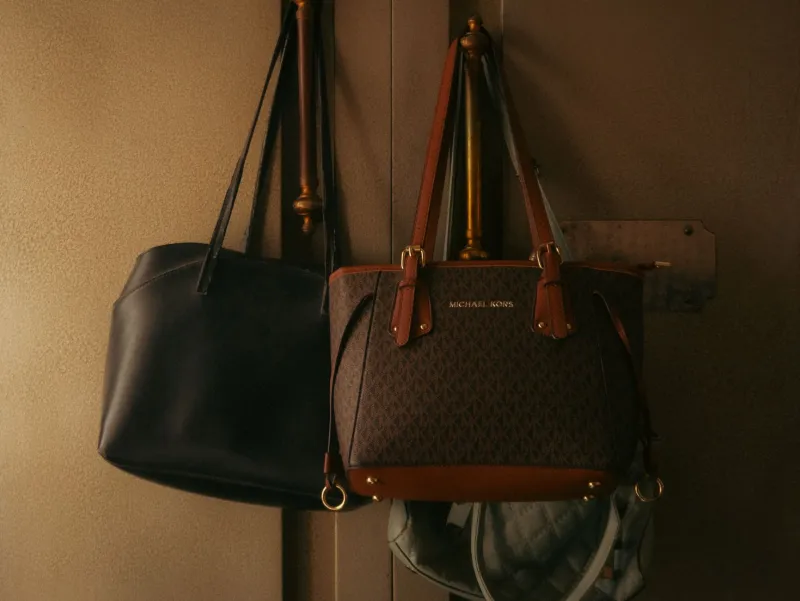
Consider what a bag's physical presence announces. A substantial, structured tote — the kind that requires a genuine grip and a squared shoulder — signals capacity. It suggests a person with obligations, someone whose day cannot be contained by a phone and a card holder. In New York boardrooms and Washington briefing rooms alike, the heavy tote remains a kind of professional uniform: I am working, it says, and I am equipped.
A featherweight clutch or slim shoulder bag tells a different story. It implies leisure, or at minimum, the luxury of traveling light. There is nothing wrong with that message — but it reads very differently at a 9 a.m. strategy meeting than it does at a Saturday gallery opening in Santa Fe.
The point is not that one weight is superior. It is that weight is a choice, and choices communicate.
Silhouette: The Architecture of Impression
Stylists we spoke with describe silhouette as the bag's "posture." Sharp corners and rigid frames project precision and formality — the visual equivalent of a pressed collar. Soft, slouchy shapes suggest ease and approachability, which is why they dominate creative industries and weekend wear from Los Angeles to Charleston.
A few reliable correspondences:
- Structured rectangles read as authoritative and considered. Ideal when you need to be taken seriously on arrival.
- Rounded or unstructured forms read as warm and relaxed. Ideal when you need to be liked on arrival.
- Miniature bags, whatever their charm, read as decorative rather than functional — a statement of style over utility.
None of these are judgments. They are simply the vocabulary available to you.
The Carry: Hand, Crook, or Crossbody
How a bag is carried may matter more than the bag itself.
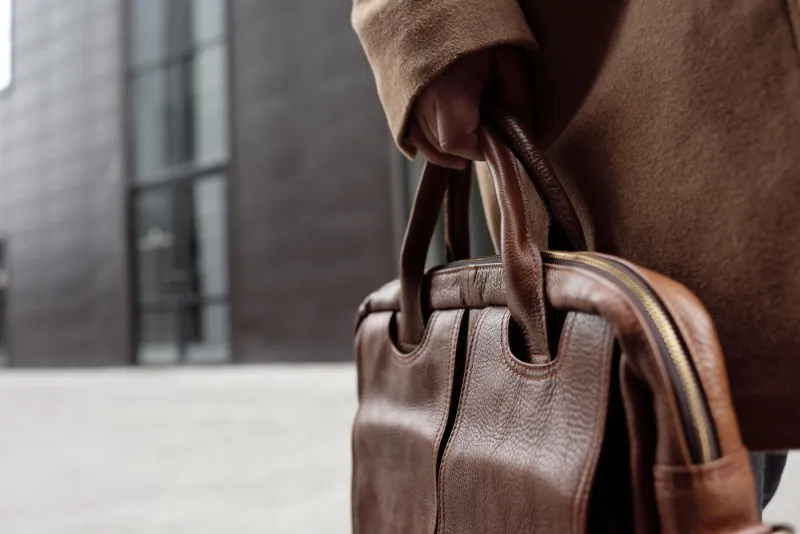
In the hand, with the arm extended, the bag becomes an accessory in motion — confident, deliberate, slightly performative. It is the carry of the runway and the restaurant entrance.
In the crook of the arm, the bag settles close to the body. This is the most traditional American carry, associated with polish and a certain old-money restraint. It flatters structure and keeps the silhouette clean.
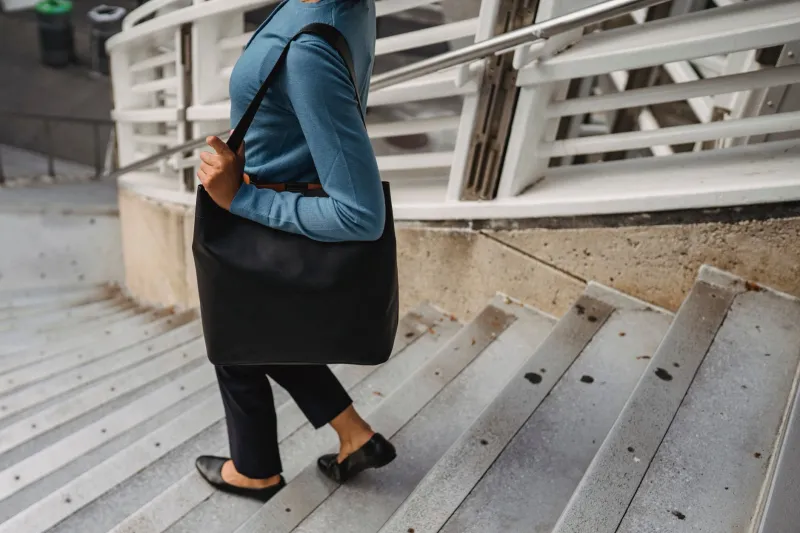
Crossbody, finally, is the carry of pragmatism: hands free, posture easy, priorities legible. In casual and creative settings it signals confidence and modernity; in the most formal rooms, it can read as slightly too relaxed.
One stylist put it succinctly: "The same bag can say 'executive' or 'errand' depending on where you put it."
A Framework for Choosing Your Message
Before leaving the house, try this three-question audit.
- What does the room require? Formality in, formality out. A structured carry for the meeting; a softer one for dinner after.
- What do I want to signal first — competence, warmth, or ease? Choose weight and structure accordingly.
- Is the carry consistent with the bag? A rigid top-handle bag slung carelessly across the body creates a mixed message. Let the design lead.
Intention Over Impression
None of this argues for dressing for the observer. The most compelling bag is the one whose message you have actually chosen — a deliberate extension of intention rather than an accident of habit. Curated luxury, at its core, is about making fewer, better decisions and understanding what they say.
Your handbag will speak whether you script it or not. It may as well say something worth hearing.