When Silence Speaks Louder: The Rise of the Unbranded Status Bag in American Wardrobes
There was a time when the handbag served as a business card you could carry. The interlocking Cs, the distinctive monogram, the signature hardware — these were deliberate signals, legible from across a restaurant in Manhattan or a parking lot in Dallas. Today, something has shifted. Walk through the financial district of any major American city and you will notice that the bags carried by the women who command the most influence are, increasingly, the ones you cannot identify at a glance.
This is the quiet flex, and it has become the defining luxury posture of the American professional class.
The Economics of Discretion
The shift away from logo-forward luxury did not happen overnight. It reflects, in part, a changing cultural climate — one in which visible displays of wealth can read as tone-deaf rather than triumphant. But reducing the movement to mere caution misses the deeper appeal. Discretion, done well, is not the absence of statement. It is a statement of a different kind.
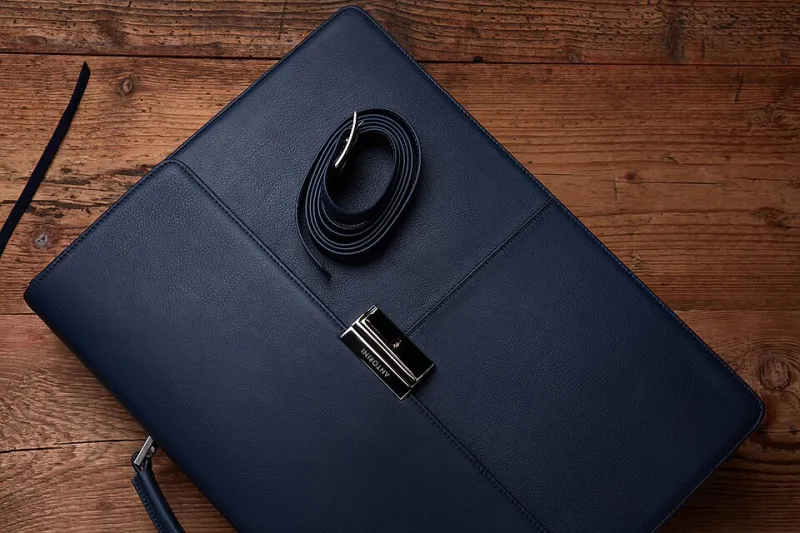
Consider the Bottega Veneta intrecciato weave, a craft technique so distinctive that those who know, know — and those who don't, simply see a beautiful bag. Or The Row's Margaux, a supple leather silhouette with no exterior branding whatsoever, priced well above many logoed alternatives. Khaite has built an entire vocabulary of hardware and proportion that rewards the educated eye. These pieces do not advertise. They require the observer to be fluent.
That fluency is the point. A logo speaks to everyone, which means it speaks to no one in particular. An unbranded masterpiece speaks only to those who have done the work of learning the language.
What This Reveals About American Taste
American luxury consumption has historically been the most demonstrative in the Western world — and, arguably, the most aspirational in spirit. The logo served newcomers to wealth; it marked arrival. But as the demographic center of luxury spending has matured, so has its expression. Women who built careers, companies, and portfolios no longer need to announce their position. Their confidence is internal, and their accessories follow suit.
There is also a practical dimension. Logo-heavy pieces date themselves with each rebrand and trend cycle. A quiet, beautifully constructed bag in grained calfskin or polished leather is largely immune to fashion's weather. It looks as appropriate at a board meeting in Chicago as it does at a gallery opening in Los Angeles, and it will look equally appropriate in fifteen years.
Finally, there is the question of context. In professional environments where displays of wealth can complicate relationships — with colleagues, clients, or the public — an understated bag allows a woman to carry something extraordinary without making it anyone else's business.
Building a Quiet Flex Collection
For those looking to embrace this approach, the principles are straightforward even if the execution demands discernment.
Prioritize craftsmanship over recognition. When the logo disappears, nothing hides. Every stitch, every edge treatment, every piece of hardware is exposed to scrutiny. This is why heritage houses with serious ateliers — Bottega Veneta foremost among them — dominate this space. The construction is the signature.
Invest in shape and proportion. Without branding to carry the design, the silhouette must do all the work. Study how a bag sits against the body, how its proportions relate to your frame, and whether its geometry feels timeless or merely current.
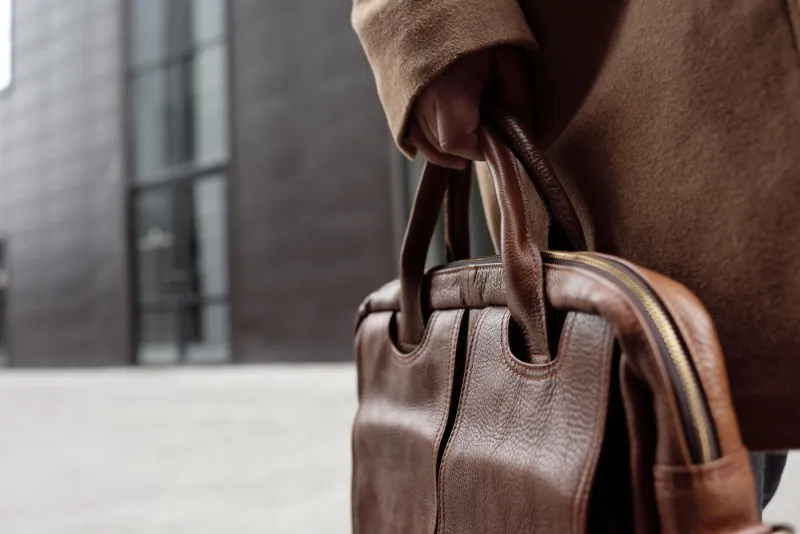
Choose materials that age with dignity. Full-grain leathers, vegetable tanning, and hardware that develops character rather than corrosion — these are the hallmarks of a bag intended to be carried for decades, not seasons.
Resist the temptation to explain. A quiet flex loses its power the moment it is announced. The pleasure lies in the private knowledge of what you are carrying.
The Lasting Appeal of the Understated
There is a reason this movement feels less like a trend and more like a correction. Logos are, at their core, borrowed authority — the designer's name doing the talking. Removing that name transfers the burden entirely to the object and, by extension, to the woman who chose it. It is a more demanding form of taste, and a more rewarding one.
At Werf Bag, we believe the finest pieces in any collection are those that need no introduction. The quiet flex is not about hiding wealth. It is about being secure enough to let the work — the craft, the leather, the intention — speak for itself. In an American culture learning the value of restraint, that may be the most powerful signal of all.